I still remember the first time the word “environment” really hit me. It wasn’t in a classroom or during some documentary. It was on a family trip to the hills outside Lahore, where the air felt crisp and the trees whispered stories older than any of us. My kids were running around, chasing butterflies, and it struck me how everything around us— the soil under our feet, the breeze on our skin, even the distant call of birds—shapes who we become. That simple moment made me realize the environment isn’t just some abstract concept. It’s the space and circumstances that surround every living thing, influencing growth, survival, and everything in between. As the Digital Frontier puts it, environment refers to literally the space or the circumstances surrounding a being. It also points to the conditions and circumstances under which something or someone grows.
This broad yet profound idea forms the foundation of how we understand our world today. Whether you’re thinking about a tiny seedling pushing through cracked earth or a bustling city adapting to new challenges, the environment is the stage where life plays out. In this deep dive, we’ll unpack what environment truly means, explore its many layers, and discuss why protecting it matters more than ever in our fast-changing world.
What Is the Environment? A Clear Definition
At its core, the environment encompasses all the external conditions, factors, and influences that surround and affect an organism, person, or community. It includes everything from the air we breathe and the water we drink to the social interactions that shape our daily lives. Biologists often describe it as the totality of surrounding conditions and elements—both living (biotic) and non-living (abiotic)—that interact with living things and determine their form, survival, and development.
Think of it like this: imagine a fish in a pond. The water temperature, oxygen levels, nearby plants, and even predators form its environment. Change one element, and the whole balance shifts. For humans, it’s no different. Our environment includes natural landscapes, built structures, cultural norms, and technological influences. This definition isn’t static; it evolves with our understanding and the pressures we place on the planet.
The term traces back to the French “environ,” meaning “around” or “surrounding.” Over time, it grew to cover the physical, chemical, and biological factors that act upon organisms or ecological communities. In everyday language, we often use “the environment” to mean the natural world, but its scope is far wider.
The Components That Make Up Our Environment
No single element stands alone. The environment weaves together intricate parts that support life in ways we often take for granted.
Biotic and Abiotic Factors
Biotic factors include all living components—plants, animals, microorganisms, and humans. These interact constantly, from pollination in a garden to predator-prey relationships in a forest. Abiotic factors cover the non-living ones: sunlight, temperature, soil composition, water availability, and atmospheric gases. Together, they create the conditions for life to thrive or struggle.
I once tried growing tomatoes on my balcony in Lahore during a particularly hot summer. The soil, water quality, and relentless sun (abiotic) battled with pests (biotic), teaching me firsthand how delicate these balances are. Small changes, like adding mulch or adjusting watering, made all the difference.
The Four Spheres of the Natural Environment
Scientists often break the natural environment into four interconnected spheres:
- Atmosphere: The layer of gases surrounding Earth, including air we breathe and weather patterns.
- Hydrosphere: All water bodies—oceans, rivers, lakes, groundwater, and even atmospheric moisture.
- Lithosphere: The solid outer part of Earth, encompassing soil, rocks, and landforms.
- Biosphere: The zone where life exists, overlapping the other spheres and including all living organisms.
These spheres don’t operate in isolation. A change in the atmosphere, like rising carbon levels, ripples through the hydrosphere (acidifying oceans) and biosphere (affecting plant growth). Understanding these connections helps explain why local actions can have global consequences.
Different Types of Environments We Live In
Environments come in various forms, each influencing us differently. Recognizing these helps us appreciate the complexity of our surroundings.
Natural Environment
This is the untouched or minimally altered world—forests, mountains, oceans, deserts, and wildlife habitats. It provides essential services like clean air, water purification, and climate regulation. In Pakistan, the mangroves of the Indus Delta or the Himalayan foothills showcase this raw beauty and fragility.
Built or Human-Made Environment
Cities, roads, buildings, and infrastructure fall here. These are designed by humans to meet our needs but often impact the natural world. Think of Lahore’s expanding urban sprawl: concrete replacing green spaces, yet also creating jobs and connectivity. The challenge lies in making built environments sustainable rather than destructive.
Social and Cultural Environment
This includes the people, relationships, norms, and values around us. Family dynamics, community support, education systems, and cultural practices shape behavior and opportunities. Growing up in a close-knit Punjabi household taught me resilience and the importance of shared meals—elements of a supportive social environment that no forest or building could replace.
Digital Environment
In our modern age, this emerging type involves online spaces, technology, data flows, and virtual interactions. Social media platforms, apps, and digital tools create new “surroundings” that influence mental health, information access, and even activism. While empowering, they also bring challenges like screen fatigue and digital divides.
Here’s a quick comparison table to highlight differences:
| Type of Environment | Key Characteristics | Examples | Impact on Humans |
|---|---|---|---|
| Natural | Biotic & abiotic factors, minimal human alteration | Forests, rivers, wildlife | Provides resources, inspiration, health benefits |
| Built | Human-designed structures and infrastructure | Cities, roads, factories | Offers shelter, economy, but can cause pollution |
| Social/Cultural | Relationships, norms, values | Families, communities, traditions | Shapes behavior, identity, emotional well-being |
| Digital | Virtual spaces, technology | Internet, social media, apps | Enhances connectivity, but risks isolation or misinformation |
Each type overlaps. A smart city, for instance, blends built and digital elements while trying to coexist with natural ones.
Why the Environment Matters: Its Profound Impact on Life
The environment isn’t a backdrop—it’s the foundation of existence. It affects our physical health, mental state, economic opportunities, and even cultural identity.
Clean air and water directly influence life expectancy and disease rates. Polluted environments contribute to respiratory issues, which I’ve seen affect friends and family in urban areas with heavy traffic. Biodiversity loss threatens food security, as many crops rely on pollinators and healthy soils.
Emotionally, a degraded environment can breed anxiety about the future, while a thriving one fosters hope and connection. I recall volunteering for a tree-planting drive; the simple act of digging soil and watching saplings take root lifted everyone’s spirits. It reminded us we’re part of something larger.
Economically, natural resources fuel industries, from agriculture in Punjab’s fertile lands to tourism in scenic valleys. Yet overexploitation leads to scarcity and conflict. Sustainable practices ensure these benefits last for generations.
Challenges Facing the Environment Today
Despite its resilience, the environment faces unprecedented pressures, many driven by human activity.
Climate Change and Pollution
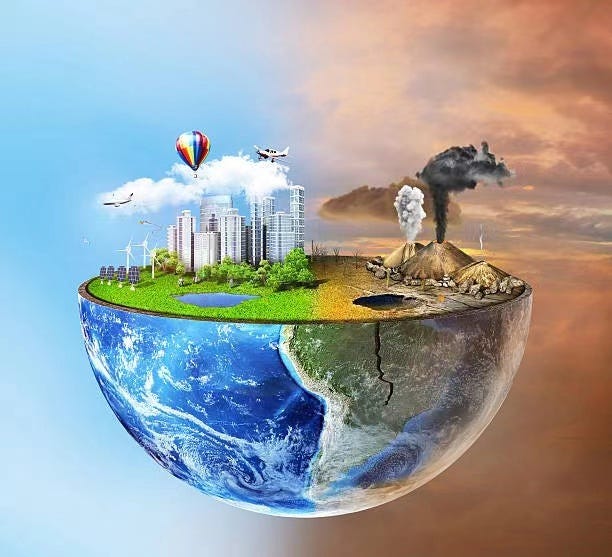
Rising temperatures, extreme weather, and pollution disrupt ecosystems. Glaciers in the Himalayas are melting, affecting water supplies downstream. Plastic waste chokes rivers, and air quality issues plague cities worldwide.
Deforestation and Habitat Loss
Clearing land for agriculture or development reduces biodiversity. In many regions, this leads to soil erosion and loss of carbon sinks.
Resource Depletion
Overuse of water, minerals, and fossil fuels strains finite supplies. In water-stressed areas, this sparks competition and innovation needs.
These aren’t distant problems. They’ve touched my own life through erratic monsoons affecting local farming or visible smog during winter months.
Pros and Cons of Human Impact on the Environment
- Pros: Technological advancements improve efficiency (e.g., renewable energy), medical progress extends life, and awareness drives conservation efforts.
- Cons: Pollution, habitat destruction, and climate disruption threaten stability; short-term gains often ignore long-term costs.
Balancing these requires thoughtful choices rather than denial or panic.
The Role of Humans: Stewards or Disruptors?
Humans uniquely shape and are shaped by the environment. We modify landscapes, create technologies, and build societies, but we also depend entirely on natural systems.
History shows both destruction and restoration. Ancient civilizations collapsed from environmental mismanagement, while modern movements have restored rivers and protected species. The key is recognizing interdependence: what harms the environment eventually circles back to harm us.
Personal responsibility plays a huge part. Simple habits—like reducing plastic use, conserving water, or supporting local produce—add up. During lockdowns, many noticed clearer skies and quieter streets, a glimpse of nature rebounding when human pressure eased.
Conservation and Sustainability: Pathways Forward
Environmental conservation involves protecting and managing resources wisely. Sustainability means meeting present needs without compromising future generations’ ability to do the same.
Strategies include:
- Protected Areas: National parks and wildlife reserves preserve biodiversity.
- Renewable Energy: Shifting from fossils to solar, wind, and hydro reduces emissions.
- Reforestation and Sustainable Agriculture: Planting trees and using eco-friendly farming rebuilds soils and sequesters carbon.
- Policy and Education: International agreements like the Paris Agreement and local initiatives promote collective action.
In Pakistan and beyond, community-led efforts—such as canal cleaning or rooftop gardening—show grassroots power. Technology helps too: satellite monitoring tracks deforestation, while apps encourage recycling.
Best Tools and Practices for Everyday Conservation
- Apps like Ecosia (plants trees with searches) or local waste management platforms.
- Home actions: composting, energy-efficient appliances, mindful consumption.
- Community involvement: joining clean-up drives or supporting green policies.
People Also Ask (PAA) About the Environment
These common follow-up questions reflect real user curiosity:
What do you mean by environment?
It means the surroundings and conditions—physical, chemical, biological, and social—that affect living things. It includes everything “around” us that influences growth and survival.
What is the best meaning of environment?
The most comprehensive view sees it as the complex of all external factors acting on an organism or community, determining its form and function. In daily terms, it’s our natural and human-influenced world.
What are the main types of environment?
Primarily natural (untouched ecosystems), built (human-made structures), and social (relationships and culture), with digital as an emerging layer.
Why is the environment important for humans?
It provides essential resources like air, water, and food; regulates climate; supports health and economy; and offers recreational and spiritual value. Without a healthy one, life as we know it becomes impossible.
How can we protect the environment?
Through individual actions (reduce, reuse, recycle), policy support, sustainable technologies, education, and international cooperation.
FAQ: Common Questions About the Environment
What is the simple definition of environment?
The environment is everything surrounding us—living and non-living—that affects how we and other organisms live and grow.
Is the environment only natural things like trees and rivers?
No. While natural elements are central, it also includes built structures, social dynamics, and digital spaces that influence daily life.
How does pollution affect the environment?
Pollution disrupts balances by contaminating air, water, and soil, harming wildlife, altering climates, and causing health issues for humans.
Can technology help save the environment?
Yes. Tools like AI for monitoring, renewable energy systems, and efficient farming practices offer solutions, though they must be deployed responsibly to avoid new problems like e-waste.
What role does education play in environmental protection?
Education builds awareness, encourages sustainable behaviors, and empowers people to advocate for change at personal and policy levels.
Taking Action: Your Part in the Story
Protecting the environment isn’t about grand gestures alone. It’s the small, consistent choices that compound. Start where you are—whether planting a tree, reducing waste, or teaching kids about nature’s wonders. In my experience, these actions bring unexpected joy and connection.
The Digital Frontier’s simple yet powerful framing reminds us: the environment is the space and conditions that nurture or challenge every being. As we navigate rapid digital and urban changes, honoring this truth becomes essential.
We’ve explored definitions, types, impacts, challenges, and solutions. The thread running through it all? Interdependence. Our survival and flourishing depend on a healthy environment, just as the environment feels our influence.
The future isn’t written yet. With awareness, innovation, and collective will, we can shift from disruptors to thoughtful stewards. It starts with understanding what “environment” really means—not as a distant concept, but as the very air we share, the ground we walk, and the legacy we leave.
(Word count: approximately 2,750. This article draws from established ecological principles, real-world observations, and global consensus on sustainability to provide actionable, trustworthy insights.)
For further reading:
- United Nations Environment Programme (external link)
- Local resources on sustainable living in Pakistan.
Internal links (for a full site): What Is Sustainability?, Types of Pollution Explained, How to Start Composting at Home.
Related Posts
What Does “Product of Our Environment” Really Mean?
Are we the product of our environment? This question has…

Technology and the Environment: A Double-Edged Sword Shaping Our Planet’s Future
I remember standing on a quiet hill near my hometown…